Burnt, Not Broken: Why Chronic Stress and Overwhelm Drain Your Energy (and How to Rebuild Capacity)
 Vicki Johnson
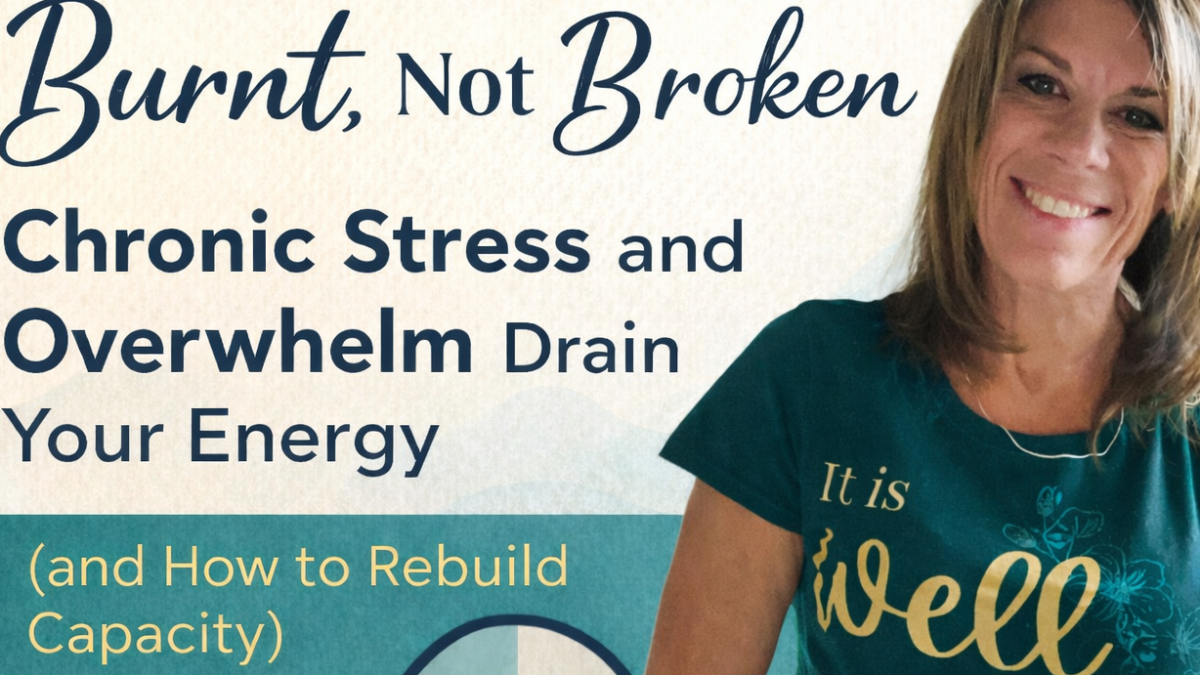
Introducing the Burnt, Not Broken Method —Featuring the BMe Model and Freedom Foundations
Restoring Capacity From the Inside Out
Some days it feels like your brain has twenty tabs open and you can’t figure out where the music is coming from. You wake up already tired. Your mind starts running before your feet even hit the floor. There are emails to answer, kids to manage, responsibilities waiting, and a mental list that never seems to end. Even when you finally sit down at night, your body doesn’t really relax. Your mind keeps reviewing the day, planning tomorrow, replaying conversations, remembering the five things you forgot to do.
You may not call it burnout. Most people don’t. Instead, it shows up as toxic stress and overwhelm that quietly build over time. Maybe you’ve noticed brain fog that makes it harder to concentrate. Maybe your patience feels thinner than it used to. Some days your energy disappears halfway through the afternoon. Other days even small decisions feel strangely exhausting.
From the outside, life may still look pretty normal. You’re functioning. You’re responsible. You’re showing up for your family and your work. But inside, your nervous system feels like it’s running on empty.
Many high-capacity women live in this space for years without realizing what is happening in their bodies. They assume they simply need to try harder, get more organized, or improve their habits. Maybe you’ve told yourself that if you could just get more disciplined with sleep, exercise, or nutrition, everything would fall back into place. But chronic stress doesn’t respond well to pressure. The nervous system isn’t motivated by willpower. It responds to safety, support, and capacity. And this is the missing piece most wellness advice overlooks.
When Your Nervous System Runs Out of Capacity
One of the patterns I see most often in my work is what I call the Push–Collapse Cycle. At first, people push through stress. They keep going. They handle the responsibilities, the schedules, the emotional demands of work and family. For a while, their determination carries them. But eventually something shifts. Energy drops. Motivation disappears. Emotional resilience feels thinner. Concentration becomes harder. Sometimes people feel anxious and wired. Other times they feel exhausted and shut down.
This doesn’t mean something is wrong with you. It means your nervous system has been carrying more stress than it has had the capacity to process. And when that happens long enough, the body eventually pushes the brakes. Not as punishment. As protection.
The Truth Many People Discover Too Late
Most people don’t realize their nervous system has been overloaded until their body forces them to slow down. But the early signals are usually there:
- Chronic fatigue
- Emotional overwhelm
- Difficulty concentrating
- Irritability
- Poor sleep
- Feeling disconnected from yourself
- Decision fatigue
These symptoms are not random. They are signals from your biology that your system has been under pressure for a long time. For years I watched people struggle with these patterns while trying every strategy they could find — productivity systems, diet plans, mindset work, self-help books. Some things helped temporarily. But the deeper patterns kept returning. That’s when I realized something important. Most wellness advice focuses on behavior change. But very few approaches focus on nervous system capacity. And without rebuilding capacity, sustainable change is incredibly difficult.
Introducing the Burnt, Not Broken Method
This realization is what led me to develop what I now call the Burnt, Not Broken Method (BNB). The name matters. Because so many people who are struggling with chronic stress believe they are broken somehow. They believe their exhaustion or overwhelm means they are failing at life. But what I want people to understand is this: You are not broken. Your nervous system has simply been carrying too much for too long without enough support.
The Burnt, Not Broken Method is the coaching framework I use to help people rebuild that capacity in a sustainable, strength-based way. Instead of asking people to push harder, this approach focuses on understanding how the nervous system developed its stress patterns in the first place—and then supporting the body in restoring balance. Two key pieces make up this method: the BMe Model and the Freedom Foundations.
The BMe Model (Beyond the Mind’s Edge)
Understanding how stress patterns form is the first step toward restoration:
The BMe Model explains how early relational experiences shape the brain’s ability to regulate stress, build skills, and handle life’s challenges. From pregnancy through early childhood, the brain is rapidly wiring the systems responsible for emotional regulation. Long before we have language, our nervous systems are asking: Is the world safe? Are people safe? Does connection bring comfort or stress?
These early experiences help shape the patterns we carry into adulthood. This is not about blaming parents—most did the best they could. But understanding these patterns helps us see why chronic stress affects us so differently. The good news? These patterns are not permanent. The brain remains adaptable throughout life.
The Freedom Foundations: Supporting the Nervous System Daily
Once people understand their stress patterns through the BMe Model, the next step is strengthening the nervous system through what I call the Freedom Foundations. These foundations represent the everyday conditions that support nervous system health and resilience. They include:
- Restorative sleep and moments of stillness.
- Nourishing food and hydration.
- Supportive relationships and healthy environments.
- Meaningful movement and moments of connection and joy.
These are not rigid rules or perfection standards. They are supportive conditions that help the nervous system gradually shift out of survival mode and into a state where healing and growth are possible. As these foundations strengthen, energy begins returning, mental clarity improves, and emotional flexibility grows. The habits that once felt impossible suddenly become easier to maintain—not because you forced yourself, but because your system finally has the support it needs.
What Rebuilding Capacity Actually Looks Like
Most of the women I work with are incredibly capable people. They are the ones who hold families together, manage responsibilities, and show up for everyone around them. But over time, that level of responsibility can quietly drain the nervous system. Many of them arrive in coaching saying something similar: “I don’t even recognize myself anymore.”
What they usually need isn’t more pressure or another system to follow. They need space to rebuild their capacity. Through the Burnt, Not Broken Method, we work together to understand the patterns behind chronic stress, strengthen the foundations, and gradually rebuild the resilience that allows people to feel like themselves again. As capacity returns, motivation and clarity often return with it. People reconnect with parts of themselves that had been buried under years of stress—curiosity, creativity, joy, and connection. These emerge naturally when the nervous system finally feels supported.
You Were Never Broken
If you’ve been living with chronic stress, overwhelm, or constant exhaustion, it’s easy to believe something is wrong with you. But more often, what’s really happening is much simpler: Your nervous system has been carrying too much for too long. The good news is that capacity can grow again. That’s the heart of the Burnt, Not Broken Method—a relationship-centered approach designed to help people restore capacity, stabilize their daily rhythms, and build resilience in a way that supports the whole person. Because you were never broken. Your system simply needed the right kind of support.
When we understand our biology and support it well, we are capable of far more healing and growth than we often realize.
Learn more about the BMe Model and Freedom Foundations at Soul Essentials Health & Wellness
Categories: : Burnout, Resilience, Stress, Trauma
Sign Up for our Newsletter
Wellness rooted in safety and connection for families, moms-to-be, and childcare professionals. Science-based tools to ease stress, build resilience, and support healthy development.