How Early Childhood Trauma Shapes Adult Stress, Relationships, and Burnout
 Vicki Johnson
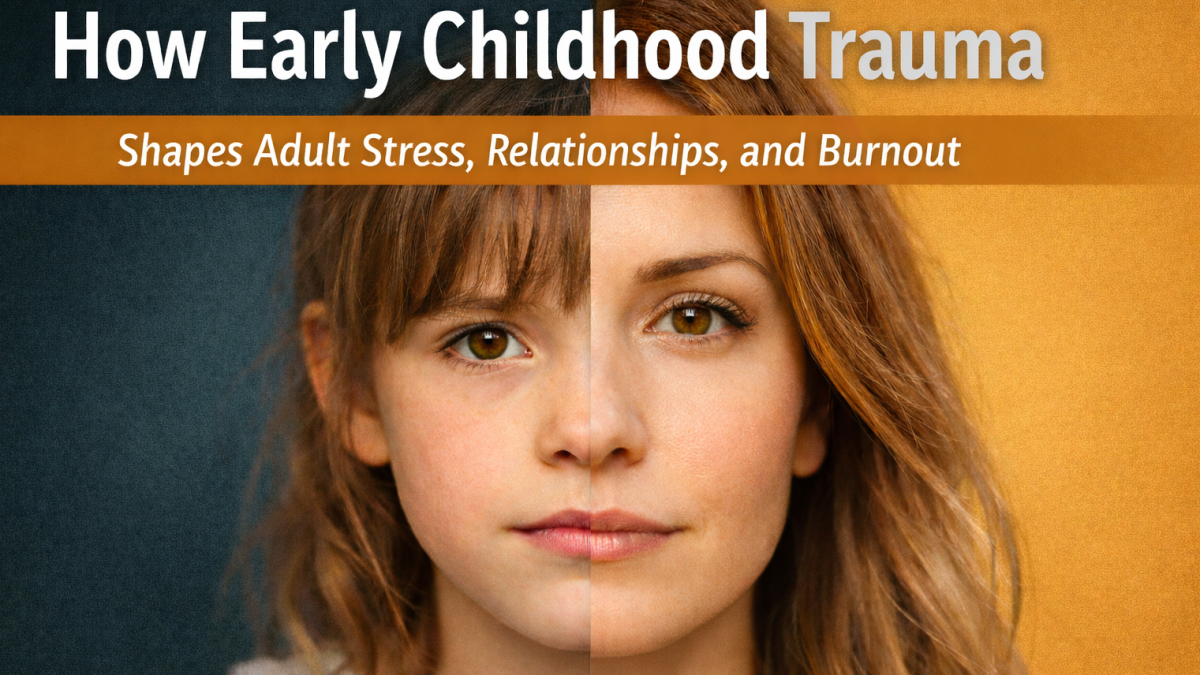
Discover why relationships feel harA trauma-informed look at attachment wounds, mother hunger, and the nervous system’s path to post-traumatic growth.
A Conversation About Trauma, Attachment, and the Biology of Hope
This article discusses childhood trauma, including sexual abuse and is shared with permission to educate and encourage others who may see parts of their own lives reflected in it. The woman telling the story is also the health coach helping make sense of it years later. What began as survival eventually became understanding—and that understanding became the foundation of the work she now teaches.
Where the Story Begins
“My childhood started in a place many people would describe as the wrong side of the tracks. My mom was a divorced, single parent trying to raise three kids in the "housing projects." She was doing the best she could, but stress often ran the household. Money was tight, life was unpredictable, and survival was the priority most days."
“My dad floated in and out of our lives. Alcohol controlled most of his decisions. Inconsistency and unpredictability became normal. My mom carried more responsibility than anyone should have to carry alone. When adults are overwhelmed, children often grow up inside that stress.”
The coach listening to this story explains: “Children don’t experience stress the same way adults do. When instability is constant, a child’s nervous system adapts by staying alert. It learns to scan the environment for danger.”
The Body Remembers First
“My earliest memories aren’t emotional ones,” the woman continues. “They’re physical. I remember constant stomach pain as a little girl. I remember the awful smell of paregoric my mom gave me for it. Back then I just thought I was a burden.”
The coach explains: “The gut and nervous system are deeply connected. When children grow up under chronic stress, their bodies often show the first signs. Digestive issues, immune problems, recurring illness—these are common when the nervous system is living in survival mode.”
Trauma Before Words
“My story started before I even had words,” she continues. “There was sexual abuse when I was very young—before I had the words or could understand it. What I remember most is the relentless feeling of helplessness born from pain I couldn’t escape. It was like a shock to the heart.”
But the trauma did not stop there. Before she turned twelve, there were two additional sexual assaults and two other attempts of sexual abuse. “When trauma happens once, it changes a child’s sense of safety,” she explains. “When it happens repeatedly, it compounds.”
“I remember lying in bed terrified—afraid of what would happen to my siblings and I were something to happened to my mom. She was the only stability we had. I remember bedtime prayers too. But I also remember being angry at God. Nobody protected me.”
The Attachment Wound
Attachment develops through early relationships. These relationships teach the brain what to expect from the world. When caregivers are overwhelmed, absent, or unable to consistently meet emotional needs, the nervous system adapts. “My mom loved us,” the survivor reflects. “But she was overwhelmed. There was so much stress that emotional connection often got lost.”
The coach explains: “When children experience harm, they rarely stop loving their caregiver. Instead, they stop loving themselves.” A child’s brain cannot risk believing their caregiver is unsafe, so it reaches a different conclusion: Something must be wrong with me.
Mother Hunger and Adaptation
This is where "Mother Hunger" can develop. The term was popularized by therapist Kelly McDaniel in her book Mother Hunger: How Adult Daughters Can Understand and Heal from Lost Nurturance, Protection, and Guidance. McDaniel describes the deep emotional longing that can occur when three essential forms of maternal care are missing or inconsistent during childhood.—nurturance, protection, and guidance.
Nurturance — emotional warmth, affection, comfort, and responsiveness. Without nurturance, a child may feel emotionally invisible, chronically lonely, and unsure of their worth.
Protection — the sense that someone keeps the child safe from harm. Without protection, a child may learn the world is unsafe and their needs will not be defended.
Guidance — help understanding identity, relationships, and boundaries. Without guidance, adult daughters often struggle with self-doubt, identity confusion, and people-pleasing.
Children adapt to survive these conditions by developing patterns such as:
- Over-functioning and hyper-independence.
- People-pleasing and emotional suppression.
- Conflict avoidance and chronic self-doubt.
As adulthood begins, demands increase—parenting, career, relationships. If a person’s internal capacity was underdeveloped due to early stress, a capacity gap forms. The nervous system now has to carry more stress than it was originally equipped to handle.
The Push–Collapse Cycle
When the nervous system reaches its limit, it cycles through a familiar exhaustion pattern:
Phase 1: The Push
Running on determination, overworking, and bypassing the body's signals to meet external demands.
Phase 2: The Collapse
Burnout and shutdown. The body forces a stop because it has carried too much for too long.
"I wasn’t broken. My body had adapted."
The Turning Point and The Hope That Remains
Healing began through somatic experiencing—developed by Dr. Peter Levine, it works by releasing trapped physiological tension through nervous system regulation, helping clients "renegotiate" trauma through techniques like grounding and body awareness. Faith, once complicated by pain, became part of rebuilding. “He heals the brokenhearted and binds up their wounds.” — Psalm 147:3
Piece by piece, the nervous system can learn safety again. Relationships can become healthier. Identity can rebuild. And the story can move from survival toward resilience.
The Message I Want to Leave You With
Millions of people believe they are too sensitive, too emotional, or too broken. But what if your nervous system simply adapted to survive environments that were too overwhelming for a child? The human brain was built for resilience. You deserve the chance to experience connection, safety, and a life that finally feels like your own.
If this story resonates with you, you are not alone. Rebuild your capacity and move from survival to connection.
Reference:
McDaniel, Kelly. Mother Hunger: How Adult Daughters Can Understand and Heal from Lost Nurturance, Protection, and Guidance. Hay House, 2021.
Categories: : Attachment, Bonding, Burnout, Faith, Resilience, Stress, Trauma
Sign Up for our Newsletter
Wellness rooted in safety and connection for families, moms-to-be, and childcare professionals. Science-based tools to ease stress, build resilience, and support healthy development.