Serve and Return: How Parent Interaction Builds a Child’s Brain
 Vicki Johnson
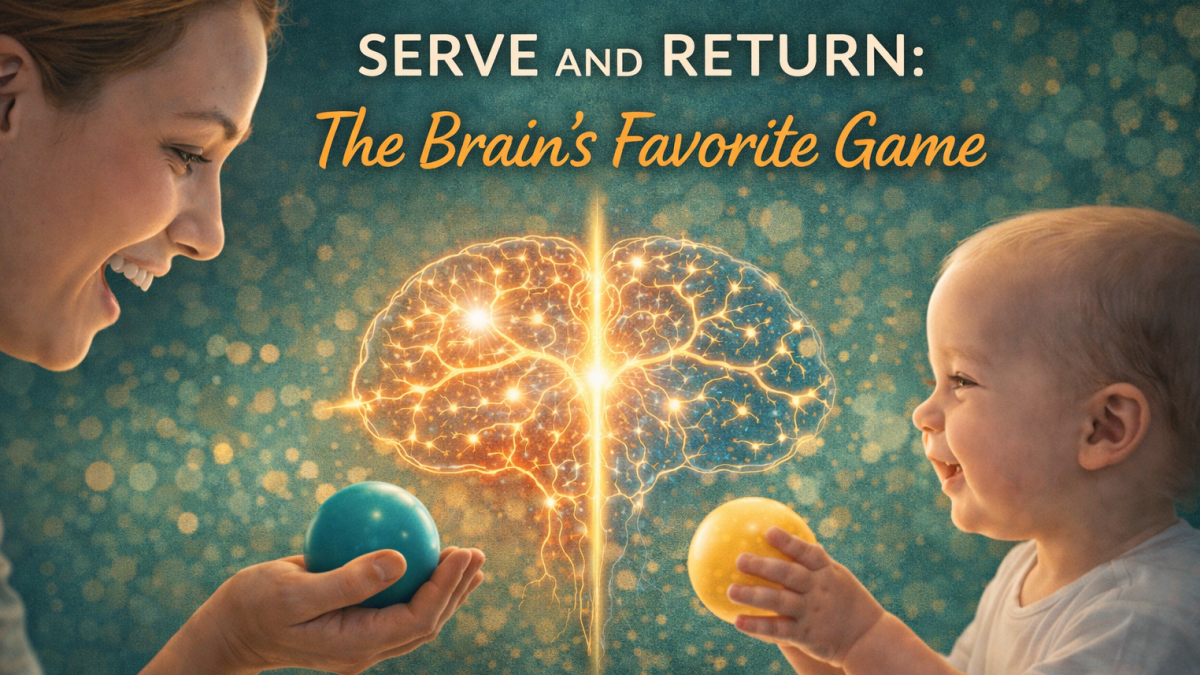
Serve-and-return interactions - the back-and-forth exchanges between caregiver and child - are key to building empathy and emotional resilience.
Day 2: Serve and Return
The Brain’s Favorite Game
Have you ever noticed how your baby coos and waits for you to coo back, or how your toddler shows you a drawing and beams when you notice the details? These back-and-forth moments might seem simple - maybe even routine - but they’re building the architecture of your child’s brain, especially their capacity for empathy.
Dr. Bruce Perry, in Born for Love: Why Empathy Is Essential—and Endangered, calls this pattern of interaction “serve and return.” Just like a game of tennis, the child “serves” with a smile, sound, or gesture, and the caregiver “returns” with attention, acknowledgment, or a gentle response. Every exchange strengthens the brain circuits that allow children to understand others’ emotions and respond with care.
Why Serve and Return Matters
These interactions do more than teach manners or communication skills. They are the building blocks of empathy and trust. When children experience reliable responses from caregivers:
- ✔ Their brains learn that the world is safe.
- ✔ They develop the ability to notice and respond to others’ feelings.
- ✔ They gain emotional resilience for future challenges.
According to Perry, the absence of serve-and-return interactions can leave children feeling uncertain and overstimulated, and their brains may prioritize survival over social connection. Even short lapses in attention can have an impact, but consistent, responsive engagement is what truly nurtures emotional growth.
Serve and Return Across Ages
Serve and return isn’t just for babies. It looks different as your child grows:
- ✔ Infants: Coos, smiles, and reaching hands → You respond with gentle touch, eye contact, and voice.
- ✔ Toddlers: Simple sentences or show-and-tell moments → You comment, ask questions, and celebrate their efforts.
- ✔ Preschoolers: Feelings, frustrations, or imaginative play → You validate emotions, participate, and guide empathy.
Each stage builds on the previous one, layering emotional intelligence like bricks in a foundation.
Practical Tips for Caregivers
- Notice the “serves.” Pay attention to small gestures, sounds, or expressions, these are invitations to connect.
- Respond with presence. Even brief acknowledgment (“I see you!” or “You did that all by yourself!”) strengthens connections.
- Keep it consistent. You don’t have to be perfect; consistency matters more than perfection.
- Model empathy yourself. Your child learns to respond with care by watching you respond with care.
These moments may feel small or routine, but they are quietly wiring your child for compassion, empathy, and social understanding.
If you’re tired, distracted, or overwhelmed, know that even small, responsive gestures count. Serve-and-return interactions don’t require hours of structured teaching; they happen naturally when you notice, respond, and connect. Over time, these exchanges become the invisible threads that hold your child’s social and emotional world together.
Empathy grows one gentle back-and-forth at a time.
The smiles, coos, and shared laughter aren’t just fleeting moments — they are the brain’s favorite game, and the one that sets your child up for a lifetime of connection.
— Soul Essentials Health & Wellness
Catch Up on the Series & Keep Learning
Did you miss Day 1?
When You’ve Lost Your Spark: Why You’re So Tired, Foggy, and Anxious
Thursday, August 21 @ 6:00pm EST.
This mini course helps you decode what’s really going on. No fluff—just science-backed insights to transform the way you support your child (and yourself).
Attribution:
This post draws upon insights from Born for Love: Why Empathy Is Essential—and Endangered by Dr. Bruce D. Perry and Maia Szalavitz (HarperCollins, 2010). Their research and stories highlight how empathy develops, why it matters, and what threatens it in modern life.
Categories: : Attachment, Bonding, Empathy, Resilience
Sign Up for our Newsletter
Wellness rooted in safety and connection for families, moms-to-be, and childcare professionals. Science-based tools to ease stress, build resilience, and support healthy development.