Why Relationships Feel Hard: Early Patterns That Shape Adult Stress
 Vicki Johnson
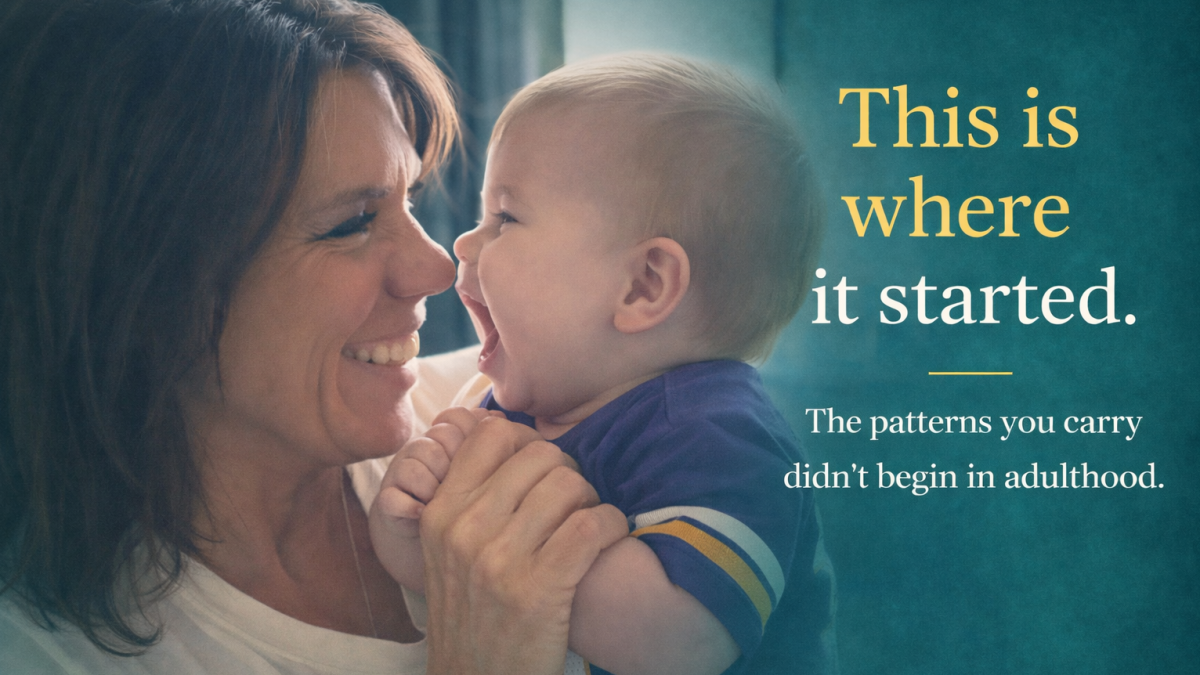
Early experiences shape how you respond to stress and relationships. Learn why your patterns make sense—and how they can begin to shift.
If you’ve ever found yourself overthinking, shutting down, overgiving, or feeling overwhelmed in ways you can’t quite explain, there’s a reason.
And it didn’t start in adulthood. Many of the patterns showing up in your relationships today are connected to early experiences that shaped how your nervous system learned to handle stress, connection, and safety.
Long before you had the words to describe what you were feeling, your body was already learning what to expect from relationships. Small, repeated moments—feeling seen, missed, comforted, or misunderstood—quietly shaped how safe connection feels and how your body responds when something feels off. These early experiences don’t just stay in the past. They influence your stress patterns, your emotional responses, and the way you move through relationships today. What you’re experiencing isn’t random—and it’s not a personal flaw. It’s a pattern your system learned early, and it can be understood.
There’s a piece of this that often gets overlooked.
In those early months and years, connection isn’t built through big moments—it’s built through thousands of tiny ones. A caregiver’s tone of voice. Eye contact. Being picked up when you cry. Being soothed… or not soothed. Being met… or missed.
And here’s the part most people don’t realize: It doesn’t have to be extreme to matter.
Even in loving homes, there are moments of misattunement—times when a baby’s needs aren’t fully seen, when responses are delayed, distracted, or inconsistent. A baby doesn’t interpret that logically. Their system simply registers the experience. Something feels off. Something doesn’t land. Something isn’t quite safe.
How the Nervous System Adapts
Over time, those small, repeated moments begin to shape how the nervous system adapts:
- If connection felt inconsistent, the system learns to stay alert—watching closely, anticipating change.
- If emotional needs weren’t fully received, the system may learn to quiet them—needing less, asking less, not reaching at all.
- If the environment felt unpredictable, the body may stay braced—ready for what might shift next.
None of this is "abnormal." It’s the body doing exactly what it was designed to do—adjusting in real time to maintain connection and some sense of safety. But those adaptations don’t stay in childhood. They grow up with you.
The child who learned to closely track a caregiver’s mood often becomes the adult who overanalyzes every shift in tone or energy. The child who learned that their needs didn’t fully land may become the adult who struggles to express them—or feels uncomfortable even having them. The child who experienced inconsistency may become the adult who feels anxious in relationships, constantly trying to secure something that never quite feels stable. And the child who adapted by disconnecting may become the adult who feels numb or distant, even when they want closeness.
The Framework of Protection
This is where things start to make more sense. Because what looks like overreacting, overthinking, or shutting down “for no reason”… isn’t random at all. It’s patterned. It’s familiar. It’s your nervous system returning to what it learned early about how to stay connected and protected at the same time.
Your brain isn’t broken. It’s incredibly good at one thing—keeping you safe. For thousands of years, it has been wired to ask a very simple question: “Am I safe… or not?” Not: “Is this relationship healthy?” Not: “Is this aligned with what I actually need?” Just: “Am I safe?”
So when something feels off in a relationship—distance, tension, inconsistency—your system doesn’t slow down and analyze it. It reacts. Sometimes by overthinking or trying to fix things. Sometimes by becoming reactive or easily overwhelmed. Sometimes by feeling stuck, unsure, or unable to move forward. Sometimes by people-pleasing and keeping the peace. And sometimes by shutting down completely.
None of that is personality. That’s protection.
The Mirror of Relationship Patterns
This is also why relationships can feel like a mirror. Not because everything is your fault—but because they reflect what your system has learned to expect, tolerate, and respond to.
- If you learned that love had to be earned, you may find yourself overgiving or overproving.
- If connection felt uncertain, you may feel unsettled the moment something shifts.
- If emotions didn’t feel safe, you may disconnect from your own without even realizing it.
- If chaos was familiar, calm can feel uncomfortable—even when it’s exactly what you need.
Some patterns go even deeper. You can know a relationship isn’t good for you… and still feel pulled toward it. Because at that point, it’s not just about the person. It’s about the pattern. When connection and disconnection happen in cycles—closeness followed by distance, then closeness again—your system begins to link relief with the very thing that caused the stress.
Over time, that can look like holding on longer than you want to, questioning your own instincts, minimizing what you feel, or trying harder instead of stepping back. Not because you don’t see what’s happening… but because your system has learned that this is what connection feels like. Somewhere along the way, many people begin to quietly abandon themselves.
Moving Toward Change
If you’ve ever asked yourself, “Why is this so hard to walk away from?” That question deserves a different kind of answer. Not one rooted in willpower. But one rooted in understanding. Because your system isn’t just reacting to what’s happening now. It’s drawing from everything it learned before.
That’s the part most people don’t hear enough: Your brain isn’t just stuck in the past. It’s always learning. Always updating. Always trying to make better predictions about what is safe. Which means change is possible. Not by forcing yourself to “just be different,” but by slowly having new experiences that your system can begin to trust.
Moments where:
- You express a need and it’s respected
- You stay present instead of overwhelmed
- You experience connection without having to earn it
- You feel calm… and nothing bad follows
This is where everything begins to shift. Not by fixing yourself… but by understanding what your system learned… and gently helping it experience something different. Because early experiences shape patterns. But they don’t have to define your future.
Reflection
Try asking: “What feels familiar here… and where did I first learn that?” That question doesn’t blame you. It brings you back to yourself. And that’s where real change begins.
- What patterns keep showing up in my relationships?
- What feels familiar—even if it doesn’t feel good?
- How did I learn to respond to connection, stress, or uncertainty early on?
- What did I have to become to feel safe or connected?
- Where might those patterns still be showing up in my life today?
- What would safety in a relationship feel like for me now?
Categories: : Attachment, Relationships, Resilience
Sign Up for our Newsletter
Wellness rooted in safety and connection for families, moms-to-be, and childcare professionals. Science-based tools to ease stress, build resilience, and support healthy development.