Beyond the Mind's Edge (BMe) Model
How Early Life Experiences Shape the Patterns
We Carry Into Adulthood
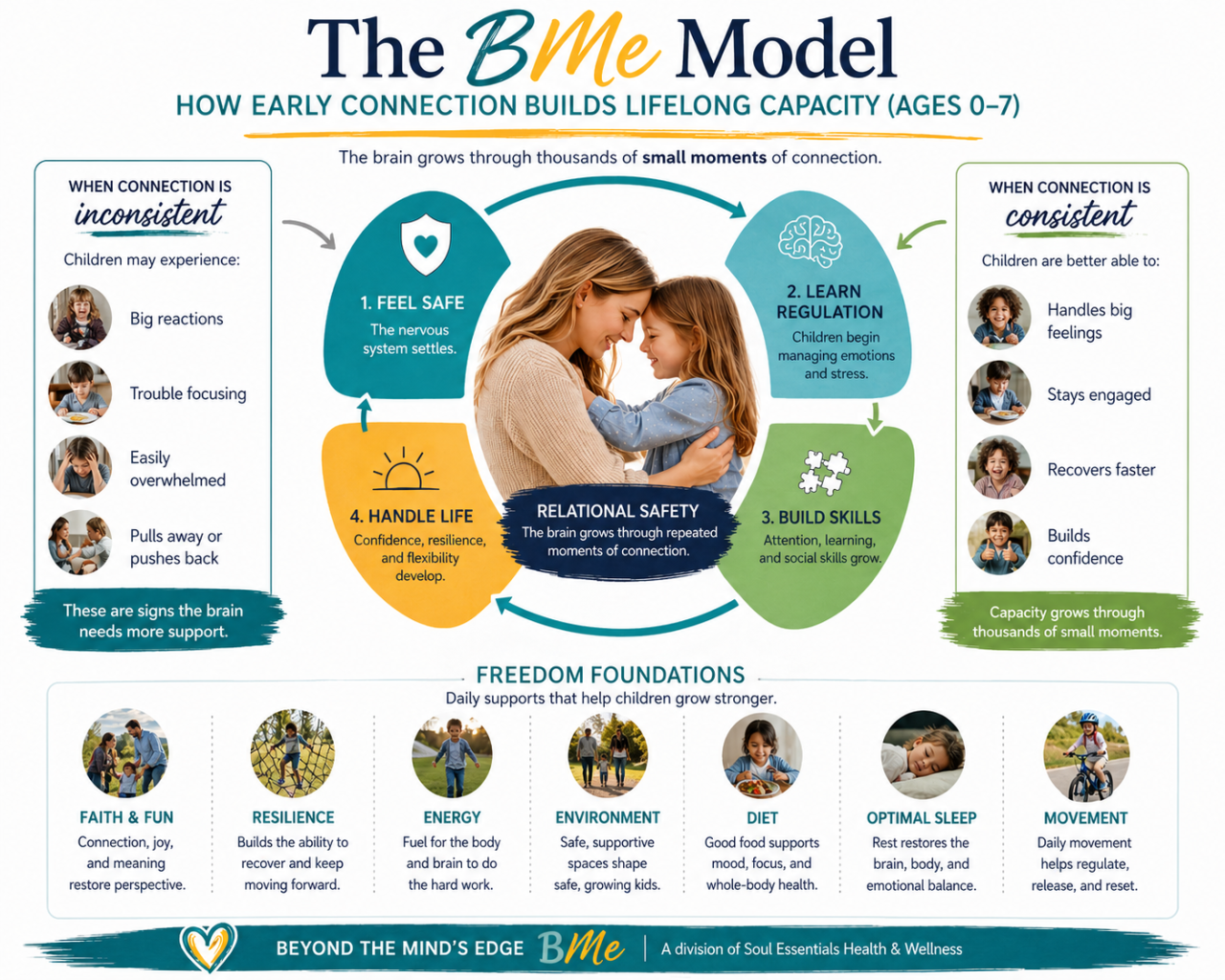
The BMe Model builds upon attachment, neurodevelopment, and nervous system research by focusing on how humans develop the capacity to handle life.
Safety allows regulation.
Regulation allows skill development.
Skills increase resilience and capacity.
Capacity determines how well we handle relationships, stress, emotions, parenting, health, and everyday life demands.
The BMe Model explores how early childhood experiences influence the patterns people carry into adulthood, especially in how they handle stress, relationships, and emotions. Research in developmental neuroscience shows that the early years of life play a powerful role in shaping how the brain learns to respond to stress, relationships, and emotional challenges.
During childhood, the nervous system is developing patterns that influence how people regulate emotions, handle pressure, and connect with others. By understanding how these patterns form, individuals and families can begin strengthening the conditions that support healthier emotional regulation, stronger relationships, and greater resilience over time.
Why Understanding Early Life Matters
Many of the adult stress patterns people experience later in life can often be traced back to the ways the brain learned to respond to stress during early development. These patterns are rarely random.
The brain begins learning how to handle stress, emotions, and relationships during the earliest years of life. Those early experiences often shape the patterns we carry into adulthood.
The BMe Model helps explain how those patterns develop and why understanding them can change the conversation from blame to awareness.
Relationship + Biology
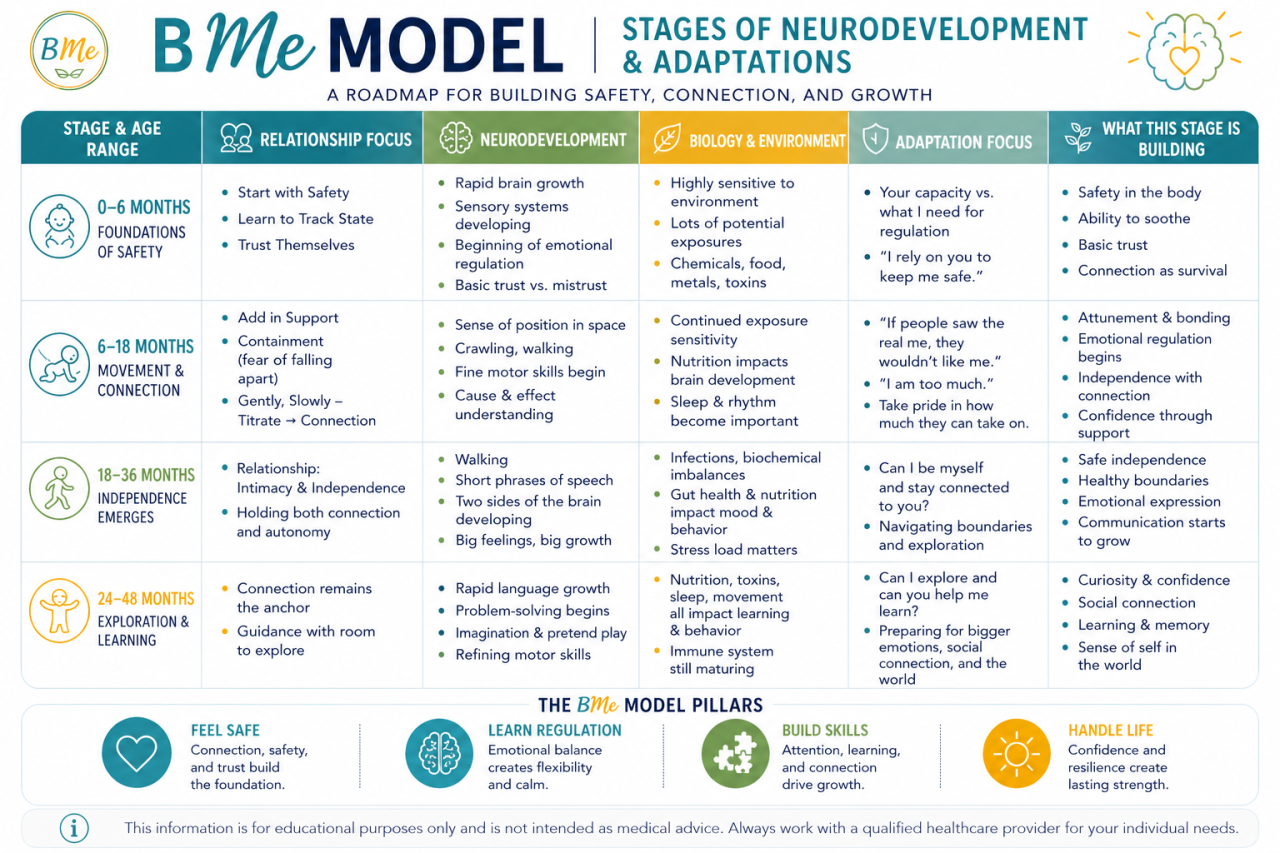
Why The First Seven Years Matter
During the early years of development, the brain is learning how to manage emotions, develop emotional regulation, and respond to stress in relationships.
Children are forming foundations for:
• emotional regulation
• stress response patterns
• relationship expectations
• self-perception
When stress is overwhelming or support is inconsistent, the developing stress response system can become more reactive later in life. Supportive relationships during childhood help buffer stress and strengthen healthy development. These early experiences create patterns that can quietly influence how people respond to challenges throughout adulthood.
This educational framework draws from research in developmental neuroscience, stress physiology, attachment science, and trauma-informed care to help explain how early experiences influence lifelong patterns.
The BMe Model Explained
The BMe Model describes how early experiences help shape the nervous system stress response, influencing how people react to pressure, conflict, and emotional challenges later in life. It highlights three key ideas:
Early Experiences
The brain learns from the environment it develops in. Relationships, safety, stress levels, and emotional support all influence development.
Pattern Formation
- Stress responses
- Emotional reactions
- Relationship dynamics
- Coping behaviors
Awareness and Growth
Understanding where patterns come from allows people to approach themselves and their families with more awareness and less self-blame. This understanding creates space for strengthening supportive conditions moving forward.
Why These Patterns Show Up in Adulthood
Many capable adults spend years pushing through stress, responsibility, and expectations until their bodies finally say:
“I can’t keep doing this anymore.”
This experience is often labeled as burnout or chronic overwhelm. But in many cases, the nervous system has simply been carrying stress patterns for a long time. When viewed through the lens of development, these patterns begin to make sense.
This is where the Burnt Not Broken perspective becomes important. Adults are not broken. Their systems have been adapting to stress based on patterns learned earlier in life.
The goal of the BMe Model is not to label people or assign blame.
Instead, it helps shift the focus toward strengthening the conditions that support healthier responses.
These conditions include:
- Supportive relationships
- Stable environments
- Emotional awareness
- Healthy lifestyle foundations
How the BMe Model Connects to the Burnt Not Broken Method
The BMe Model explains how patterns form. The Burnt Not Broken Method explains what happens when those patterns are carried under prolonged stress.
Together they provide a framework for understanding both:
• early development
• adult overwhelm
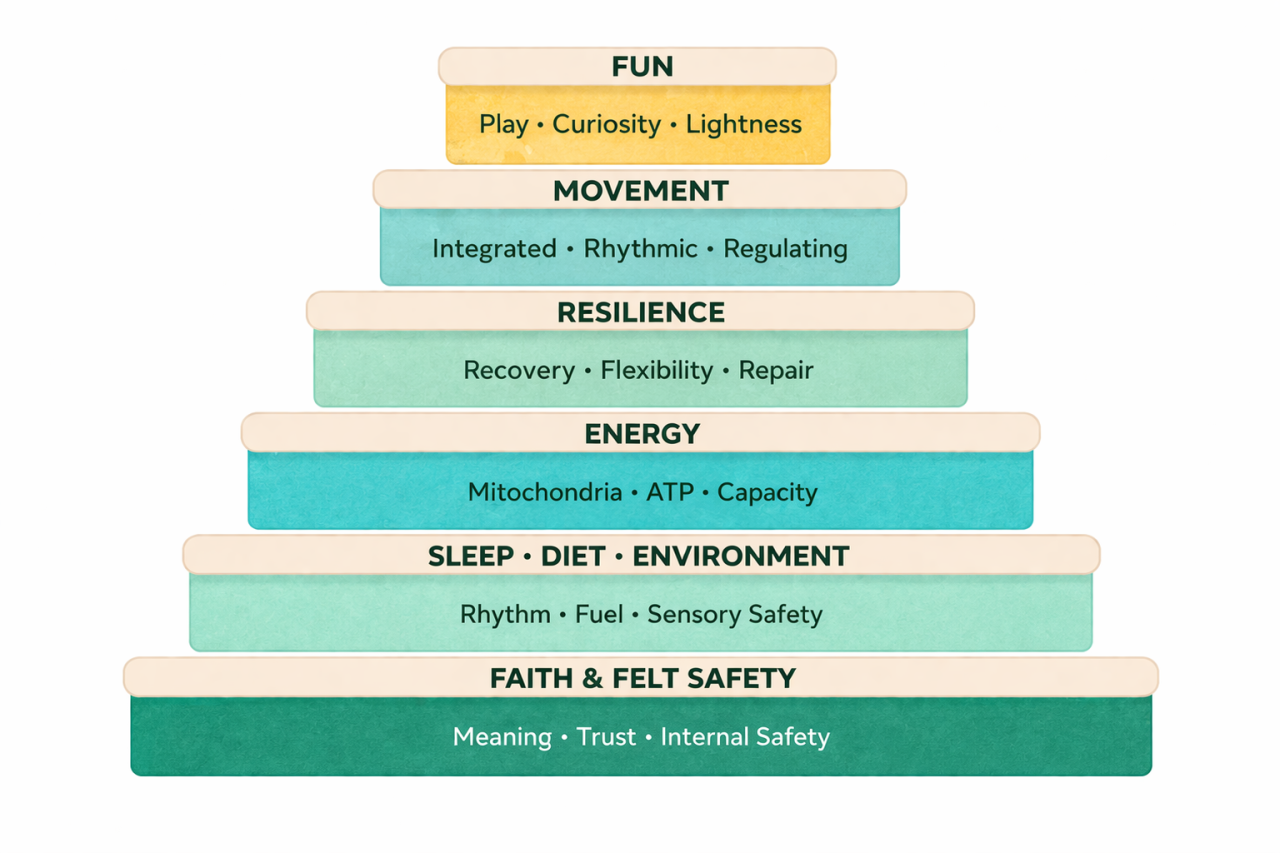
The FREEDOM Foundations then describe the pillars that help restore balance and support growth.
Continue Learning
Understanding these patterns is often the first step toward meaningful change.
You can explore this work further through:
- Trauma-informed courses
- Educational blog articles
- Wellness consultations
- Burnt not broken framework

Free to Be Me
For most of my life, I thought exhaustion was just the price of being responsible. Like many high-functioning women, I became very good at pushing through—holding everything together while my nervous system quietly lived in a push–collapse cycle.
• Environment
• Diet
• Optimal Sleep
• Movement
Together, these foundations help address the root conditions that influence stress regulation, emotional resilience, and long-term health. Most importantly, this framework is evidence-based yet realistic for busy caregivers.
What We Do
Through my BMe Model, people begin to see how the ways they manage stress and navigate relationships often start taking shape in their earliest years. When those patterns are carried under long periods of stress, many capable people eventually burn out.
My work helps people recognize those patterns and strengthen the foundations that support healthier growth — so they can move from survival into the freedom to be themselves. The women I work with are often high achievers, raising children, managing households, and balancing work and family responsibilities. They don’t need complicated wellness routines—they need practical tools that meet them where they are.
Today my work focuses on supporting women to see the hidden patterns that quietly lead to burnout so they can rebuild their capacity and show up differently in their lives and families.
When a mother’s nervous system becomes more regulated, the ripple effect reaches far beyond her own well-being.
Children benefit.
Relationships shift.
Families grow stronger.
Because when women understand the connection between stress, nervous system regulation, and early life experiences, they gain the ability to break the push–collapse cycle and create a healthier path forward—for themselves and for the next generation.
Your kitchen is the heart of your home and of your health. Let’s kick the confusion out of the kitchen. We’ll put together a game plan for grocery shopping, meal prepping, cooking (yes, even the ‘what’s for dinner?’ panic), so you can make mindful, feel-good food choices without losing your sanity....
or living off cereal.
From restful sleep to navigating life’s challenges with confidence, your daily choices play a big role in your health. I’ll guide you in building habits that nurture your energy, boost your confidence, and encourage self-compassion—helping you create a life that feels vibrant, sustainable and in harmony. Resilience is possible!
By combining science-based strategies with a holistic approach, we tap into the power of awareness to drive lasting transformation. When you understand how your mind, body, and emotions work together, change becomes natural—helping you thrive in ways that truly align with your needs.
Credentials
Vicki Johnson, MS, BSH, CFHC – Trauma-Informed Certified Functional Health Coach
•Certified Functional Health Coach (2019)
• Advanced level Biology of Trauma training (2019-2023)
• Master’s Degree in Organizational Leadership
• Bachelor’s Degree in Health Administration
• Over 30 years of experience working within healthcare systems
As a mother of two and a grandmother of three, I bring both professional training and real-life experience to my work with women and families.
My goal is simple: To help women move out of survival mode and build the nervous system capacity needed to live with greater energy, clarity, and connection.